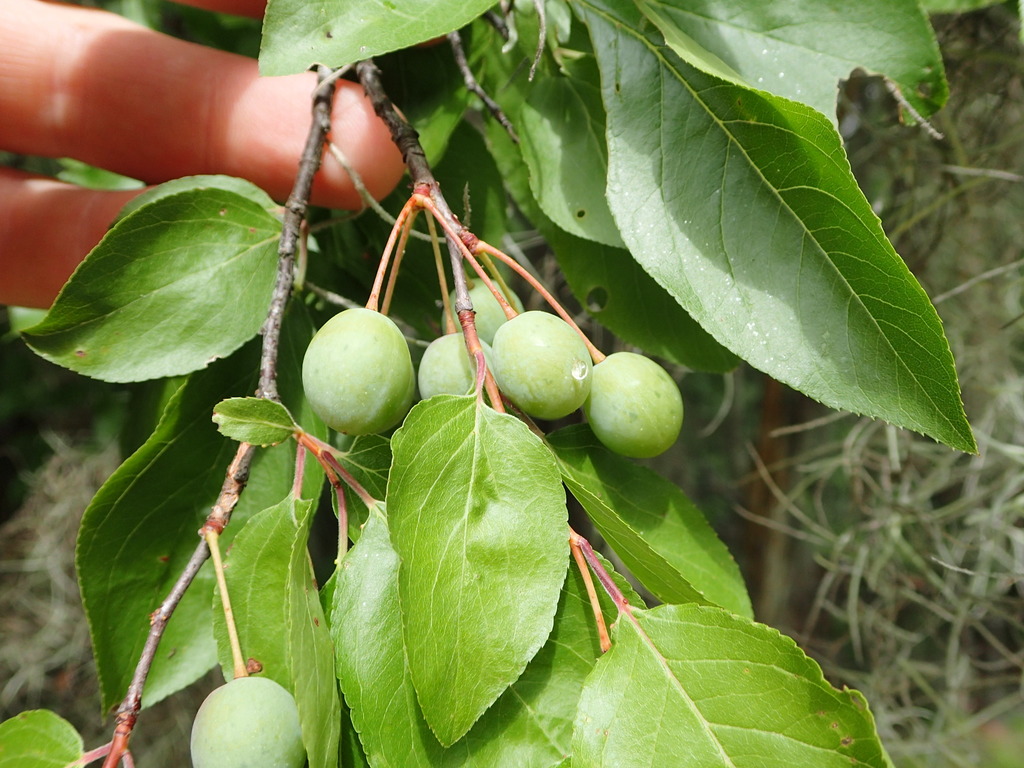
Absolutely! Here’s an article on Native Plum Tree Identification, aiming for around 1200 words, followed by a recipe listing.
Unearthing the Sweetness: A Guide to Identifying Native Plum Trees
The subtle beauty and delicious bounty of native plum trees often go unnoticed, overshadowed by their more cultivated cousins. Yet, these resilient and ecologically vital plants offer a unique window into the natural heritage of many regions. Identifying them, whether for their edible fruit, their contribution to local ecosystems, or simply for the joy of discovery, is a rewarding pursuit. This guide will delve into the key characteristics that distinguish native plum species, empowering you to recognize these often-humble yet magnificent trees.

The Importance of Native Plum Trees
Before we embark on the identification journey, it’s crucial to understand why native plums are so significant.
- Ecological Keystone Species: Native plum trees provide critical food sources for a wide array of wildlife, including birds, mammals, and insects. Their blossoms offer early-season nectar and pollen for pollinators, while their fruits sustain creatures throughout the autumn and winter. They also serve as crucial habitat and nesting sites.
- Biodiversity: By supporting local wildlife, native plums contribute to the overall biodiversity of an ecosystem. Their presence is often an indicator of a healthy, balanced environment.
- Resilience and Adaptation: Native species are naturally adapted to their local climate and soil conditions, making them hardy and less susceptible to pests and diseases compared to non-native varieties.
- Cultural Significance: For centuries, indigenous peoples have utilized native plums for food, medicine, and cultural practices. Recognizing these trees connects us to this rich history.
- Unique Flavors: The fruits of native plums, while often smaller and tarter than cultivated varieties, possess a complex and intense flavor profile that is a delight for those who seek it out.
The Challenge of Identification
Identifying native plum trees can be challenging for several reasons:
- Variability: Even within a single species, there can be significant variation in size, leaf shape, fruit color, and growth habit.
- Hybridization: Native plums can readily hybridize with each other and with cultivated plums, leading to intermediate characteristics that can be confusing.
- Subtle Differences: The distinctions between different native plum species can be subtle, requiring careful observation of multiple features.
- Geographic Range: The species present will vary significantly depending on your geographical location.
Key Identification Features
To accurately identify a native plum tree, we need to examine several key characteristics. It’s best to observe a tree throughout its life cycle, noting features during different seasons.
1. Growth Habit and Size
Native plums are typically small to medium-sized trees or large shrubs, rarely exceeding 30 feet in height.
- Tree vs. Shrub: Some species tend to grow as multi-stemmed shrubs, while others can develop into more distinct, single-trunked trees. Observe if the plant originates from a single trunk or multiple suckers from the base.
- Crown Shape: The crown can be rounded, spreading, or somewhat irregular.
- Thorns: A very common and important characteristic of many native plum species is the presence of thorns, particularly on younger branches or along the trunk. These thorns can vary in length and sharpness.
2. Bark
The bark can provide clues, though it may be less distinctive than other features, especially on older trees.
- Color and Texture: Young bark is often smooth and reddish-brown to gray. As the tree matures, the bark may become rougher, fissured, or even peel in plates, though this is less common than in some other tree types.
- Lenticels: Look for lenticels, which are small, horizontal pores on the bark. Their shape, size, and arrangement can sometimes be indicative.
3. Leaves
Leaves are a crucial diagnostic feature. Pay attention to their arrangement, shape, size, margins, and surface.
- Arrangement: Plum leaves are alternate, meaning they emerge one at a time from the stem, not directly opposite each other.
- Shape: Leaves are typically ovate (egg-shaped), elliptic, or lanceolate (long and narrow).
- Size: Leaf size can vary, but generally, they are from 2 to 6 inches long.
- Apex and Base: The tip (apex) can be pointed or blunt, and the base can be rounded or tapering.
- Margins: The edges of the leaves are usually serrated or doubly serrated. The nature of the serrations (sharpness, regularity) can be helpful.
- Surface: Observe the top (adaxial) and bottom (abaxial) surfaces of the leaf. Is it smooth, hairy, or glaucous (having a whitish or bluish bloom)? Are there any glands present, particularly near the base of the leaf or on the petiole?
- Petiole: The stalk that attaches the leaf blade to the stem. Note its length and whether it has any glands or hairs.
4. Flowers
The spring bloom is a beautiful and often abundant display. Plum flowers are typically white and have five petals.
- Timing: Note when the flowers appear relative to leaf emergence. Some species bloom before the leaves fully unfurl, while others bloom alongside them.
- Petal Shape and Size: Petals are usually rounded or slightly notched.
- Number of Stamens: Count the number of stamens (male reproductive parts). This can be a distinguishing feature.
- Glands on Pedicel/Calyx: Look for small glands on the flower stalk (pedicel) or the calyx (sepals).
5. Fruit (Plums)
The fruit is the most anticipated feature and offers strong identification clues.
- Ripening Time: Plums ripen from late summer to fall, depending on the species and location.
- Size and Shape: Native plums are generally smaller than cultivated varieties, ranging from cherry-sized to golf-ball-sized. They can be round, oval, or even slightly elongated.
- Color: Fruit color is highly variable and can range from yellow, orange, red, purple, to dark blackish-red. The skin may be smooth or have a powdery bloom (glaucous).
- Flesh: The flesh color can be yellow, red, or greenish.
- Stone: The stone (pit) is hard and usually smooth. Its shape and the presence or absence of a groove can be a diagnostic feature. The stone may cling to the flesh or separate easily.
- Taste: While subjective, tasting can be a helpful, though not always definitive, identification tool. Native plums are often tart, astringent, and intensely flavored.
6. Habitat and Distribution
Understanding where a plum tree is growing can narrow down the possibilities.
- Typical Habitats: Native plums often thrive in open woodlands, forest edges, prairies, savannas, riverbanks, and disturbed areas.
- Soil Preferences: They are generally adaptable but may prefer well-drained soils.
- Geographic Range: Research the native plum species common to your specific region. This is a crucial step.
Common Native Plum Species to Look For (North America)
While the exact species will vary by continent, here are some common native plum genera and examples found in North America that you might encounter. Remember to consult local flora guides for precise identification in your area.
Genus: Prunus
This genus includes cherries, peaches, apricots, and plums. Within this genus, we focus on the species commonly referred to as "plums."
-
Prunus americana (American Plum):
- Habit: Large shrub or small tree, often forming thickets.
- Thorns: Prominent, sharp thorns, up to 2 inches long.
- Leaves: Ovate to elliptic, 3-6 inches long, doubly serrated margins, often hairy on the veins underneath.
- Flowers: White, blooming with or just before the leaves.
- Fruit: Red to yellow, round to oval, 0.5-1 inch in diameter, tart. Ripens in late summer/early fall.
- Habitat: Widespread across much of the eastern and central United States and southern Canada, often in open woods, fields, and along stream banks.
-
Prunus nigra (Canada Plum / Black Plum):
- Habit: Shrub or small tree.
- Thorns: Present, but often less prominent than P. americana.
- Leaves: Ovate to obovate, 2-4 inches long, sharply serrated, often sticky.
- Flowers: White, bloom early, before the leaves fully emerge. Known for its profuse bloom.
- Fruit: Red to dark purple, oval, 0.75-1.25 inches long, tart, often with a bloom. Ripens in late summer.
- Habitat: Primarily found in northeastern North America, including Canada and parts of the northeastern US, often in wet areas, along riverbanks, and in thickets.
-
Prunus besseyi (Besson’s Plum / Wild Ground Plum / Western Sand Cherry):
- Habit: Low, spreading shrub, often forming dense thickets.
- Thorns: Usually thornless or with very small, inconspicuous thorns.
- Leaves: Lanceolate to narrowly ovate, 1-3 inches long, finely serrated, often grayish-green.
- Flowers: White, blooming in late spring.
- Fruit: Dark purple to black, round, about 0.5 inch in diameter, tart but edible. Ripens in mid- to late summer.
- Habitat: Native to the Great Plains region of North America, often found in sandy soils, prairies, and open woodlands.
-
Prunus maritima (Beach Plum):
- Habit: Thorny shrub, often forming dense, sprawling thickets.
- Thorns: Sharp and numerous.
- Leaves: Ovate to obovate, 1-3 inches long, finely serrated.
- Flowers: White, blooming in late spring.
- Fruit: Purple to reddish-purple, round to oval, 0.5-0.75 inch in diameter, tart. Ripens in late summer to early fall.
- Habitat: Coastal regions of eastern North America, particularly along dunes and sandy shores.
Important Note: This is not an exhaustive list. Many other native plum species and varieties exist, and their identification can be complex. Always consult local field guides, herbaria, or expert botanists for definitive identification in your specific region.
Tips for Successful Identification
- Use Multiple Features: Don’t rely on a single characteristic. Combine observations of leaves, bark, thorns, fruit, and growth habit.
- Observe Throughout the Year: Different features are prominent at different times. Leaves are best in summer, flowers in spring, and fruit in late summer/fall. Bark and habit are visible year-round.
- Take Clear Photos: When in doubt, take detailed photos of leaves (top and bottom), bark, thorns, flowers, and fruit from various angles.
- Consult Local Resources: Local field guides, university extension offices, native plant societies, and experienced naturalists are invaluable resources.
- Understand Your Region: Familiarize yourself with the native flora of your specific area.
- Be Patient and Persistent: Identification can take practice. The more you observe, the better you will become.
From Wild to Wonderful: A Taste of Native Plums
Once you’ve identified a native plum tree and confirmed its edibility (always exercise caution and be 100% sure of your identification before consuming wild fruits), you can enjoy its unique flavors. Native plums are often too tart for eating fresh but excel in jams, jellies, pies, sauces, and as flavorings.
Native Plum Recipe Listing
Native plums, with their intense, tart-sweet flavor, are fantastic for preserving and transforming into delicious treats. Here’s a listing of common ways to enjoy them:
1. Native Plum Jam/Jelly:
- Description: The classic way to preserve the season’s bounty. The high pectin content of many native plums makes them ideal for a firm set.
- Key Ingredients: Native plums (pitted and chopped), sugar, lemon juice (for pectin and brightness).
- Preparation: Cook plums with a little water until soft, then mash or blend. Combine with sugar and lemon juice and cook until thickened.
2. Native Plum Sauce/Compote:
- Description: A versatile sauce that can be served warm or cold over pancakes, waffles, yogurt, ice cream, or pork.
- Key Ingredients: Native plums (pitted and chopped), water or juice (apple or orange), sugar or honey to taste, cinnamon or other spices.
- Preparation: Simmer plums with liquid and sweetener until tender and sauce-like. Add spices as desired.
3. Native Plum Pie/Cobbler:
- Description: The tartness of native plums provides a wonderful contrast to a sweet pie crust or biscuit topping.
- Key Ingredients: Native plums (pitted and sliced), sugar, flour or cornstarch (for thickening), spices (cinnamon, nutmeg), pie crust or biscuit topping.
- Preparation: Mix plums with sugar, thickener, and spices. Pour into a pie shell or baking dish and top with crust or biscuits. Bake until golden and bubbly.
4. Native Plum Syrup:
- Description: A concentrated liquid flavor perfect for cocktails, sodas, drizzling over desserts, or flavoring baked goods.
- Key Ingredients: Native plums (juiced or pureed and strained), sugar, water.
- Preparation: Cook plums and water, strain the juice, then combine with sugar and simmer to a syrupy consistency.
5. Native Plum Leather (Fruit Roll-Ups):
- Description: A chewy, concentrated fruit snack that captures the intense flavor of the plums.
- Key Ingredients: Native plum puree (cooked and strained if desired), optional sweetener.
- Preparation: Spread a thin layer of plum puree onto a baking sheet lined with parchment paper. Dry in a low oven or dehydrator until leathery and pliable.
6. Native Plum Chutney:
- Description: A savory-sweet condiment, often with a spicy kick, that pairs well with cheeses, roasted meats, or Indian dishes.
- Key Ingredients: Native plums (chopped), onions, vinegar, sugar, ginger, chili peppers, spices (e.g., mustard seeds, coriander).
- Preparation: Simmer all ingredients together until thickened and the flavors meld.
7. Native Plum Wine/Liqueur:
- Description: For the adventurous, native plums can be fermented into wine or used to infuse spirits for a unique liqueur.
- Key Ingredients: Native plums, sugar, yeast, water (for wine); native plums, spirits (vodka, brandy), sugar (for liqueur).
- Preparation: Varies significantly depending on the desired product; typically involves fermentation or infusion processes.
Important Considerations for Using Native Plums in Recipes:
- Sweetness Adjustment: Native plums are often quite tart. You’ll likely need to adjust the amount of sugar in recipes to your personal preference.
- Pectin: Many native plums have high pectin content, which aids in thickening jams and jellies naturally. If your plums seem low in pectin, you might need to add commercial pectin or increase cooking time.
- Flesh Removal: For most recipes, you’ll want to pit and chop or puree the plums. Some recipes may benefit from peeling, but often the skins add color and flavor.
- Safety: Always be 100% certain of your identification before consuming any wild fruit. If in doubt, do not eat it.
Enjoy your journey of discovery and the delicious rewards of native plum trees!


