
The Riberry Tree: A Comprehensive Growing Guide to This Native Australian Gem
The Riberry tree, scientifically known as Syzygium leuhmannii, is a captivating native Australian fruit tree that offers a unique culinary experience and adds significant ornamental value to any garden. With its glossy, dark green foliage, delicate pink flowers, and strikingly vibrant crimson berries, the Riberry tree is more than just a source of delicious fruit; it’s a conversation starter and a valuable addition to the Australian landscape. This guide aims to provide a comprehensive overview of how to successfully grow and care for your Riberry tree, from planting to harvesting and enjoying its delightful produce.
Understanding the Riberry Tree: Botany and Characteristics
Syzygium leuhmannii is a member of the Myrtaceae family, a diverse group of plants that includes well-known species like eucalyptus and tea trees. Native to the rainforests of eastern Australia, the Riberry tree thrives in humid, subtropical to tropical environments. It is an evergreen tree, typically growing to a moderate height of 6-15 meters in its natural habitat, though it can be kept smaller in cultivation.
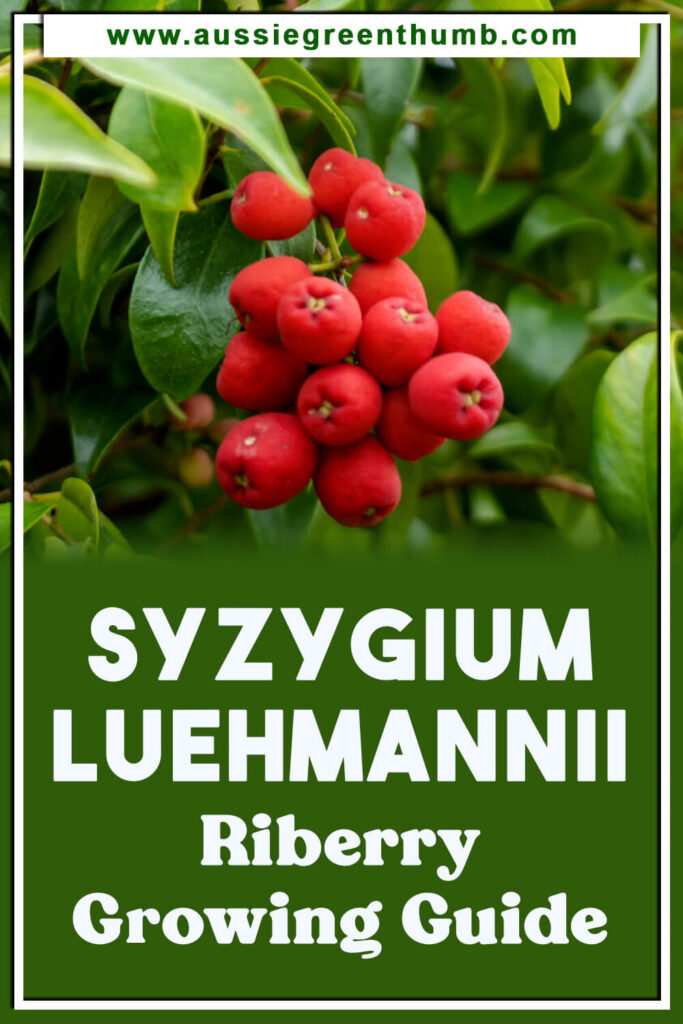
Key Characteristics:
- Foliage: The leaves are lanceolate to ovate, glossy, and a deep, rich green. New growth often emerges with a reddish or bronze hue, adding further visual appeal.
- Flowers: Small, fluffy, and white to pale pink, appearing in clusters during spring and summer. They are highly attractive to pollinators.
- Fruit: The most distinctive feature is its fruit. These are small, edible berries, typically 1-2 cm long, with a vibrant crimson to deep red color when ripe. They hang in clusters and have a tart, slightly astringent flavor with a hint of cranberry and raspberry, hence the common name "Riberry." The texture is firm, with a single small seed at the core.
- Bark: The bark is usually smooth and greyish.
- Root System: The Riberry tree has a relatively shallow root system, making it suitable for planting in various garden settings, including near structures, provided there is adequate drainage.

Cultivating Your Riberry Tree: From Seed to Fruiting
Growing a Riberry tree can be a rewarding experience, whether you are an experienced gardener or a novice. With the right conditions and a little attention, you can enjoy a bountiful harvest.
1. Site Selection: The Foundation of Success
Choosing the right location is paramount for the health and productivity of your Riberry tree.
- Sunlight: Riberry trees prefer full sun to partial shade. While they can tolerate some shade, optimal fruit production and vigorous growth are achieved in sunny locations.
- Soil: They thrive in well-draining, fertile soil. A slightly acidic to neutral pH (5.5-7.0) is ideal. If your soil is heavy clay, consider amending it with compost, well-rotted manure, or organic matter to improve drainage and aeration. Sandy soils may benefit from the addition of organic matter to improve water retention.
- Climate: Riberry trees are best suited to subtropical and tropical climates. They are sensitive to frost, especially when young. If you live in a region with occasional frosts, it’s advisable to plant them in a protected spot, such as near a north-facing wall, or consider growing them in pots that can be moved indoors during cold snaps. Temperatures below 0°C can damage or kill young trees.
- Wind Protection: While established trees are reasonably wind-tolerant, young trees can benefit from some protection from strong winds, which can cause dehydration and physical damage.
2. Planting Your Riberry Tree
From Seed:
Growing from seed can be a patient process. Seeds typically need to be fresh and may have varying germination rates.
- Scarification/Stratification: Some sources suggest scarifying the seed coat (gently nicking it with a file) or cold stratification (placing seeds in moist sand in the refrigerator for a few weeks) to improve germination.
- Sowing: Sow seeds in a well-draining seed-raising mix, about 1 cm deep.
- Germination: Keep the mix moist and warm. Germination can take anywhere from a few weeks to several months.
- Transplanting: Once seedlings are large enough to handle, transplant them into individual pots.
From Grafted Saplings or Nursery Stock:
This is the most common and often the most successful method.
- Timing: The best time to plant is typically during the warmer months when the risk of frost has passed, allowing the tree to establish its root system before winter.
- Hole Preparation: Dig a hole that is twice as wide and as deep as the root ball of the sapling.
- Root Preparation: Gently loosen any compacted roots on the root ball. If the roots are circling tightly, you may need to carefully tease them apart or make a few vertical cuts to encourage outward growth.
- Planting: Place the sapling in the center of the hole, ensuring the top of the root ball is level with the surrounding soil.
- Backfilling: Fill the hole with the excavated soil, mixing in some compost or organic matter if desired. Avoid adding excessive fertilizer directly into the planting hole, as this can burn the roots.
- Watering: Water thoroughly after planting to settle the soil and eliminate air pockets.
- Mulching: Apply a layer of organic mulch around the base of the tree, keeping it a few centimeters away from the trunk. Mulch helps retain moisture, suppress weeds, and regulate soil temperature.
3. Watering and Feeding
- Watering: Riberry trees prefer consistent moisture, especially during their establishment phase and when fruiting. Water deeply and regularly, allowing the soil to dry slightly between waterings. Avoid waterlogging, which can lead to root rot. In hotter, drier periods, you may need to water more frequently.
- Fertilizing: Young trees benefit from light feeding with a balanced, slow-release fertilizer in spring and again in summer. For mature trees, a yearly application of compost or a slow-release organic fertilizer in early spring is usually sufficient. Over-fertilizing can lead to excessive leafy growth at the expense of fruit production.
4. Pruning and Training
Riberry trees generally require minimal pruning. However, some strategic pruning can help maintain shape, improve air circulation, and encourage fruit production.
- Shape: Prune to remove any crossing or rubbing branches, dead or diseased wood, and water sprouts. You can also prune to maintain a desired size and shape, especially if planting in a smaller garden or as a feature tree.
- Fruit Production: Pruning can be done after fruiting to encourage new growth and flower bud formation for the following season.
- Timing: The best time for major pruning is typically in late winter or early spring before the new growth spurt. Light pruning can be done throughout the year as needed.
5. Pest and Disease Management
Riberry trees are generally quite hardy and resistant to pests and diseases. However, like any plant, they can occasionally be susceptible to issues.
- Common Pests: Aphids and scale insects can sometimes appear, particularly on new growth. These can often be managed by spraying with a strong jet of water or by using insecticidal soap or neem oil.
- Fungal Diseases: In humid conditions, fungal spots might occur. Good air circulation through pruning and avoiding overhead watering can help prevent these.
- Birds: Birds are often attracted to the ripening berries. You may need to use netting to protect your crop if this becomes a problem.
6. Pollination
Riberry trees are generally self-pollinating, meaning a single tree can produce fruit. However, planting multiple trees can sometimes lead to improved fruit set and yield. Their flowers are attractive to bees and other beneficial insects, which play a role in pollination.
7. Harvesting Your Riberries
The Riberry tree typically fruits from late spring through summer and into autumn, depending on the climate. The berries are ready to harvest when they are fully colored crimson and have a slightly soft feel.
- Timing: Check your trees regularly once the berries begin to ripen.
- Method: Gently pull the berries from the stems. They usually come away easily when ripe. You can harvest them individually or by snipping clusters.
- Storage: Fresh Riberries can be stored in the refrigerator for a few days. For longer storage, they can be frozen whole on a tray and then transferred to an airtight container.
Culinary Delights: Using Riberries
The tart, slightly astringent flavor of Riberries makes them incredibly versatile in the kitchen. They are best used in cooked preparations where their tartness can be balanced with sweetness.
- Jams and Jellies: Their high pectin content makes them ideal for making delicious jams and jellies.
- Sauces and Coulis: Riberries can be cooked down into sauces or coulis to accompany desserts, meats, or cheese platters.
- Pies and Tarts: Their tartness adds a wonderful counterpoint to sweet fillings in pies, tarts, and crumbles.
- Sorbets and Ice Cream: Frozen Riberries can be used to create refreshing sorbets and add a vibrant flavor to ice cream.
- Infusions: They can be used to infuse spirits like gin or vodka, creating unique, fruity liqueurs.
- Salads: A small amount of fresh Riberries can be added to salads for a burst of color and tartness, though they can be quite intense if eaten raw in large quantities.
Riberry Recipes: A Taste of Native Australian Flavors
Here are a few ideas to get you started with your Riberry harvest:
1. Simple Riberry Jam
Ingredients:
- 500g Riberries (fresh or frozen)
- 500g granulated sugar (adjust to taste and desired sweetness)
- Juice of 1 lemon
Instructions:
- Wash the Riberries. If using fresh, remove any stems.
- Place the Riberries and lemon juice in a saucepan.
- Cook over medium heat, stirring occasionally, until the berries soften and release their juices (about 10-15 minutes). Mash them gently with a potato masher or the back of a spoon.
- Add the sugar and stir until it dissolves completely.
- Bring the mixture to a rolling boil, stirring constantly. Boil for 10-15 minutes, or until the jam reaches setting point (a small amount dropped onto a cold saucer should wrinkle when pushed).
- Skim off any foam from the surface.
- Pour the hot jam into sterilized jars, seal immediately, and let cool.
2. Riberry and Apple Crumble
Ingredients:
- For the Filling:
- 300g Riberries
- 2 large apples, peeled, cored, and sliced
- 50g granulated sugar (adjust to taste)
- 1 tsp cinnamon
- For the Crumble Topping:
- 150g plain flour
- 75g cold butter, cubed
- 75g brown sugar
- 50g rolled oats (optional)
Instructions:
- Preheat oven to 180°C (160°C fan/Gas Mark 4).
- Prepare the Filling: In a bowl, combine the Riberries, sliced apples, sugar, and cinnamon. Toss to coat evenly. Pour the mixture into a greased ovenproof dish.
- Prepare the Crumble Topping: In a separate bowl, rub the cold butter into the flour with your fingertips until the mixture resembles breadcrumbs. Stir in the brown sugar and oats (if using).
- Sprinkle the crumble topping evenly over the fruit filling.
- Bake for 30-40 minutes, or until the topping is golden brown and the fruit is bubbling and tender.
- Serve warm, perhaps with vanilla ice cream or custard.
3. Riberry Gin Cocktail
Ingredients:
- 50ml Gin
- 25ml fresh lime juice
- 15ml simple syrup (adjust to taste)
- 15-20 Riberries, muddled
- Ice
- Soda water or tonic water (optional)
- Fresh mint or a Riberry for garnish
Instructions:
- In a cocktail shaker, muddle the Riberries gently.
- Add the gin, lime juice, and simple syrup to the shaker.
- Fill the shaker with ice and shake well until thoroughly chilled.
- Double strain the mixture into a chilled glass filled with fresh ice.
- Top up with a splash of soda water or tonic water if desired.
- Garnish with a sprig of fresh mint or a few Riberries.
Conclusion
The Riberry tree is a delightful and rewarding plant to cultivate for its beauty and its uniquely flavored berries. By providing the right conditions, regular care, and a little patience, you can enjoy the vibrant crimson fruits of your labor. Whether you are looking to add a touch of native Australian flora to your garden, seeking a unique culinary ingredient, or simply enjoy the process of growing your own food, the Riberry tree is an excellent choice that offers a wealth of benefits. So, embrace this native gem and unlock the delicious potential of the Riberry.


