
Bunya Nut Tree for Sale: A Journey into the Culinary and Ecological Wonders of Araucaria bidwillii
The Bunya nut tree, scientifically known as Araucaria bidwillii, is a majestic conifer native to the rainforests of southeastern Queensland, Australia. Renowned for its towering presence, unique architectural form, and the highly prized Bunya nut, this tree offers a captivating blend of ecological significance and culinary delight. For those seeking to introduce a touch of the extraordinary to their landscapes, or perhaps to cultivate a source of a truly unique food, the prospect of a Bunya nut tree for sale presents an exciting opportunity. This article delves into the allure of the Bunya nut tree, its cultivation, its incredible nut, and the potential it holds for discerning gardeners and adventurous cooks.
A Living Relic: The Ancient Majesty of the Bunya Nut Tree
The Araucaria bidwillii is an ancient species, a living fossil that has graced the Australian continent for millions of years. Its distinctive appearance, characterized by whorls of stiff, sharply pointed, dark green leaves arranged along horizontal branches, gives it a prehistoric charm. Mature trees can reach impressive heights of up to 40 meters (130 feet), with a broad, often irregular crown that creates a dramatic silhouette against the sky. Their trunks are thick and columnar, often developing a buttressed base, adding to their imposing stature.

Beyond their aesthetic appeal, Bunya nut trees play a crucial role in their native ecosystems. They provide habitat and food for a variety of native wildlife, including possums, gliders, and numerous bird species. Their presence contributes to the biodiversity and health of the rainforest environment. For gardeners, planting a Bunya nut tree is an investment in a long-term, spectacular specimen that will provide shade, beauty, and a tangible connection to Australia’s ancient past.
Cultivating a Giant: The Bunya Nut Tree in Your Garden
While native to a specific climate, Bunya nut trees have proven to be remarkably adaptable and are now cultivated in various subtropical and warm temperate regions around the world. When considering a Bunya nut tree for sale, it’s essential to understand their growth requirements to ensure successful establishment and long-term health.
Climate: Bunya nut trees thrive in warm, frost-free climates with good rainfall. They prefer subtropical conditions but can tolerate occasional light frosts once established. They are well-suited to coastal areas and regions with moderate humidity.
Soil: They are not overly fussy about soil type, but they perform best in well-drained, fertile loams. They can tolerate sandy soils if amended with organic matter and clay soils as long as drainage is adequate. Avoid waterlogged conditions, as this can lead to root rot.
Sunlight: Bunya nut trees require full sun for optimal growth and nut production. Young trees may benefit from some protection from intense afternoon sun in very hot climates, but mature trees need ample sunlight.
Watering: During the establishment phase, regular watering is crucial to help the tree develop a strong root system. Once mature, they are relatively drought-tolerant, but consistent watering during dry spells will promote healthier growth and better nut yields.
Planting: When purchasing a Bunya nut tree for sale, it will typically be a young sapling in a pot. Dig a hole twice the width of the root ball and to the same depth. Gently remove the tree from its pot, loosen any circling roots, and place it in the hole. Backfill with soil, tamping gently to remove air pockets. Water thoroughly after planting.
Pest and Disease: Bunya nut trees are generally robust and resistant to many pests and diseases. However, like all trees, they can occasionally be affected by issues such as scale insects or root rot if conditions are unfavorable. Good air circulation and proper watering practices are key to prevention.
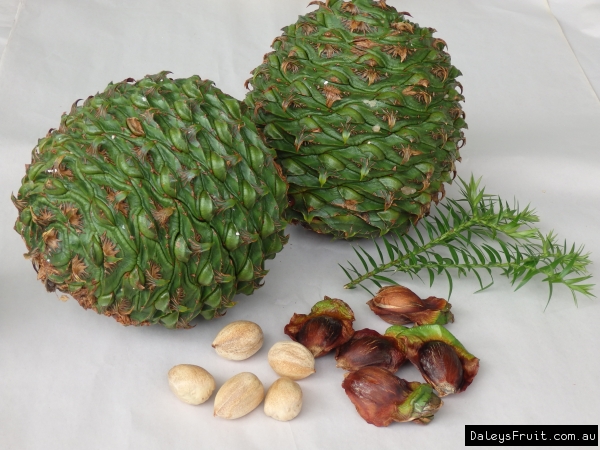
Cone Production and Nut Harvest: The most anticipated aspect of owning a Bunya nut tree is, of course, the Bunya nut itself. These trees begin producing their characteristic large, round cones (often weighing several kilograms) when they reach maturity, which can take anywhere from 7 to 15 years, or sometimes longer, depending on growing conditions. The cones are a sight to behold, often covered in a prickly, woody shell. When ripe, they naturally split open, releasing the precious nuts.
It is important to note that Bunya nuts fall from the tree, and the cones can be heavy. Harvesting requires caution. It is advisable to collect nuts after they have fallen, ideally after rain, which often loosens them. Always wear sturdy footwear and be aware of falling cones. The nuts themselves are enclosed in a hard, leathery shell, which needs to be removed before cooking.
The Culinary Treasure: Unveiling the Bunya Nut
The Bunya nut is a truly unique culinary ingredient. When raw, it has a slightly starchy, somewhat bland flavor, but its true potential is unlocked through cooking. Roasting, boiling, or frying transforms the nut into a delicious and versatile foodstuff with a rich, creamy texture and a nutty, slightly sweet flavor reminiscent of chestnuts or macadamia nuts.
Nutritional Value: Bunya nuts are a good source of carbohydrates, protein, and healthy fats. They also contain various vitamins and minerals, making them a nutritious addition to the diet.
Versatility in the Kitchen: The mild yet satisfying flavor of the Bunya nut lends itself to a wide array of culinary applications. They can be enjoyed on their own as a snack, incorporated into savory dishes, or used in sweet preparations.
Finding Your Bunya Nut Tree: Where to Purchase
When you decide to embark on the journey of owning a Bunya nut tree, the first step is finding a reputable source. Bunya nut trees for sale are typically available from:
- Specialty Nurseries: Nurseries that focus on native Australian plants or rare and exotic species are often the best places to find healthy Bunya nut saplings.
- Online Retailers: Many reputable online nurseries ship plants across various regions. Ensure they have a good track record and offer appropriate shipping for live plants.
- Botanical Gardens and Institutions: Sometimes, botanical gardens or agricultural research institutions may have sales or propagation programs that offer Bunya nut trees.
When purchasing, look for a tree that appears healthy, with vibrant green foliage and no signs of pests or diseases. The size of the sapling will influence its initial growth rate, but the quality of the root system is paramount.
A Sustainable and Rewarding Choice
Owning a Bunya nut tree is more than just planting a tree; it’s an investment in a living legacy. It’s a connection to Australia’s natural heritage, a provider of ecological benefits, and a source of a truly exceptional culinary ingredient. The journey from seedling to cone-bearing giant is a patient one, but the rewards – from the majestic presence in your garden to the delicious harvest of Bunya nuts – are immeasurable. For those seeking a tree that offers both beauty and bounty, the Bunya nut tree for sale represents a truly unique and deeply satisfying choice.
Bunya Nut Recipes: A Taste of the Outback
The Bunya nut, with its unique flavor and texture, is a versatile ingredient that can be used in a variety of dishes. Here are a few simple recipes to get you started:
1. Roasted Bunya Nuts (The Classic Snack)
This is the simplest and most popular way to enjoy Bunya nuts.
Ingredients:
- Freshly harvested Bunya nuts (removed from their cones)
- Water (for boiling, optional)
- Olive oil or butter (optional, for roasting)
- Salt, to taste
Instructions:
- Prepare the Nuts: Carefully remove the Bunya nuts from their thorny cones. The outer shell is leathery and can be tough. You may need a sturdy knife or cleaver.
- Boil (Optional but Recommended): For easier shelling and to soften the nut, it’s recommended to boil them first. Place the nuts in a large pot and cover with water. Bring to a boil and simmer for 15-20 minutes. Drain and let them cool slightly.
- Shell the Nuts: Once slightly cooled, use a knife or nutcracker to carefully crack and remove the leathery outer shell. The inner skin can be peeled off while warm, but it’s not strictly necessary.
- Roast:
- Oven Roasting: Preheat your oven to 180°C (350°F). Toss the shelled nuts with a drizzle of olive oil or a knob of butter and a pinch of salt. Spread them in a single layer on a baking sheet. Roast for 20-30 minutes, or until golden brown and fragrant, turning them occasionally.
- Pan Roasting: Heat a dry skillet over medium heat. Add the shelled nuts and toast, stirring frequently, until they are lightly browned and have a nutty aroma. You can add a little oil or butter towards the end if desired. Season with salt.
Serving: Enjoy warm as a delicious, satisfying snack.
2. Bunya Nut and Herb Pesto
A delightful twist on a classic pesto, using the creamy texture of Bunya nuts.
Ingredients:
- 1 cup shelled and roasted Bunya nuts
- 2 cups fresh basil leaves, packed
- 1/2 cup grated Parmesan cheese
- 2-3 cloves garlic, minced
- 1/2 cup extra virgin olive oil (or more, to achieve desired consistency)
- Salt and freshly ground black pepper to taste
- Juice of 1/2 lemon (optional)
Instructions:
- Combine: In a food processor, combine the roasted Bunya nuts, basil leaves, Parmesan cheese, and minced garlic.
- Process: Pulse until coarsely chopped.
- Emulsify: With the food processor running, slowly drizzle in the olive oil until the pesto reaches your desired consistency. It should be smooth but still have some texture.
- Season: Season with salt, freshly ground black pepper, and lemon juice (if using). Taste and adjust seasoning as needed.
Serving: Serve with pasta, spread on bread, or as a dip.
3. Bunya Nut and Mushroom Risotto
The creamy Bunya nuts add a wonderful depth and richness to this classic Italian dish.
Ingredients:
- 1 cup Arborio rice
- 1 tablespoon olive oil
- 1 small onion, finely chopped
- 2 cloves garlic, minced
- 200g mushrooms (e.g., button, cremini), sliced
- 1/2 cup dry white wine
- 4 cups vegetable or chicken broth, warm
- 1/2 cup shelled and roughly chopped roasted Bunya nuts
- 1/4 cup grated Parmesan cheese
- 2 tablespoons butter
- Salt and freshly ground black pepper to taste
- Fresh parsley, chopped, for garnish
Instructions:
- Sauté Aromatics: Heat olive oil in a large, heavy-bottomed pot or Dutch oven over medium heat. Add the chopped onion and cook until softened, about 5 minutes. Add the minced garlic and cook for another minute until fragrant.
- Cook Mushrooms: Add the sliced mushrooms to the pot and cook until they release their moisture and begin to brown, about 5-7 minutes.
- Toast Rice: Add the Arborio rice to the pot and stir for 1-2 minutes until the grains are slightly translucent at the edges.
- Deglaze: Pour in the white wine and stir until it is almost completely absorbed.
- Add Broth: Begin adding the warm broth, one ladleful at a time, stirring constantly until each ladleful is absorbed before adding the next. Continue this process for about 18-20 minutes, or until the rice is creamy and al dente.
- Incorporate Bunya Nuts and Cheese: Stir in the chopped roasted Bunya nuts, Parmesan cheese, and butter. Stir until the butter is melted and the cheese is incorporated.
- Season: Season generously with salt and freshly ground black pepper to taste.
- Serve: Ladle the risotto into bowls and garnish with fresh chopped parsley.
4. Bunya Nut Flour Pancakes
A gluten-free and flavorful pancake option.
Ingredients:
- 1 cup Bunya nut flour (finely ground roasted Bunya nuts)
- 1/2 cup all-purpose flour (or gluten-free flour blend)
- 1 tablespoon sugar
- 1 teaspoon baking powder
- 1/2 teaspoon baking soda
- 1/4 teaspoon salt
- 1 large egg
- 1 1/4 cups milk (or dairy-free alternative)
- 2 tablespoons melted butter or oil, plus more for greasing the pan
Instructions:
- Combine Dry Ingredients: In a large bowl, whisk together the Bunya nut flour, all-purpose flour, sugar, baking powder, baking soda, and salt.
- Combine Wet Ingredients: In a separate bowl, whisk together the egg, milk, and melted butter or oil.
- Combine Mixtures: Pour the wet ingredients into the dry ingredients and stir until just combined. Do not overmix; a few lumps are okay.
- Cook Pancakes: Heat a lightly greased griddle or non-stick skillet over medium heat. Pour about 1/4 cup of batter per pancake onto the hot griddle. Cook for 2-3 minutes per side, or until golden brown and cooked through.
- Serve: Serve warm with your favorite toppings like maple syrup, fresh berries, or yogurt.
Enjoy exploring the unique flavors of the Bunya nut!


