
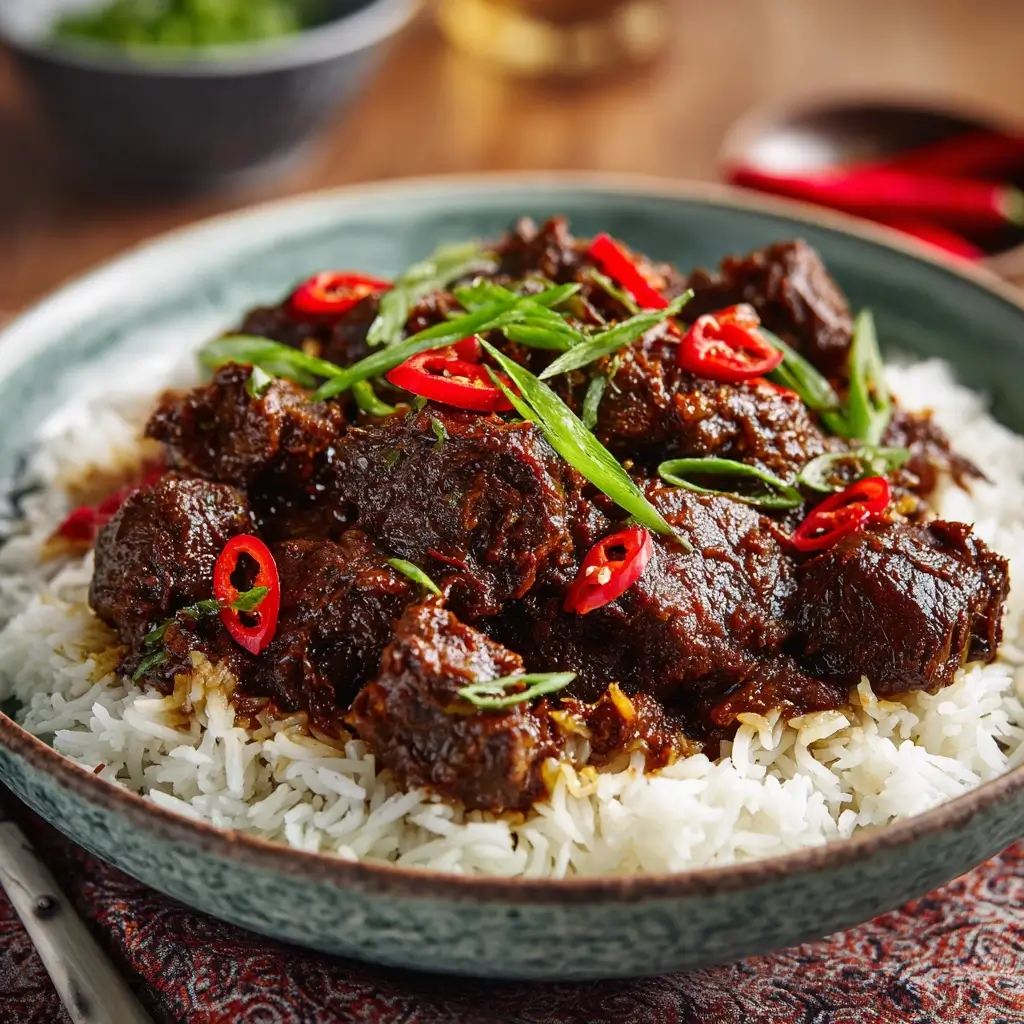
In the tapestry of global cultures, certain dishes stand out as symbols of home, heritage, and communal celebration. Beef Rendang, a legendary slow-cooked coconut milk and spice-laden beef dish from West Sumatra, Indonesia, is undoubtedly one such culinary icon.
More than just a meal, Rendang embodies patience, tradition, and the warmth of shared experiences. It’s a dish frequently prepared for special occasions, religious festivals, and, significantly, at gatherings that honor the vibrant tapestry of migrant cultures.
The deep, complex flavors of Rendang tell a story of journeys, resilience, and the desire to keep culinary traditions alive across continents. Its rich aroma alone can transport one back to cherished memories and ancestral kitchens.
This comprehensive, anti-fail recipe is designed to help you recreate the authentic taste of Rendang, allowing you to share this magnificent dish with your loved ones and celebrate cultural heritage through the universal language of food.

Get ready to embark on a culinary adventure that promises to fill your home with an intoxicating aroma and your table with a dish that speaks volumes of love and tradition.
- Preparation: 45 minutes
- Active Cooking: 2-3 hours
- Simmering (until dry): 2-3 hours
- Total Time: Approximately 5-6 hours
Difficulty Level: Medium to Hard (due to time and numerous ingredients, but manageable with detailed steps)
Yields: 8-10 servings
- 1.5 kg beef (preferably brisket, chuck, or short ribs), cut into 2-inch cubes
- 1.5 liters thick coconut milk (from ~3-4 fresh coconuts or good quality canned)
- 500 ml thin coconut milk (or water, if using canned thick coconut milk only)
- 100g Kerisik (toasted coconut paste – see ‘Secret Tips’ for making your own)
- 150g shallots, peeled
- 8 cloves garlic, peeled
- 50g fresh ginger, peeled and sliced
- 75g fresh galangal, peeled and sliced
- 20g fresh turmeric, peeled and sliced (or 1 tsp turmeric powder)
- 10-15 red chilies (adjust to your spice preference; use less for milder, more for spicier)
- 5 candlenuts, roasted (or macadamia nuts as a substitute)
- 3 stalks lemongrass (white part only), sliced
- 1 tsp cumin powder
- 1 tsp coriander powder
- 1/2 tsp fennel powder
- 3 stalks lemongrass, bruised (use the green part)
- 6 kaffir lime leaves, torn
- 2 turmeric leaves, tied in a knot (optional, but highly recommended for authentic flavor)
- 2 tbsp tamarind paste, dissolved in 1/4 cup warm water, strained
- 2 tsp salt, or to taste
- 1 tbsp palm sugar (gula merah), grated, or to taste
- 3-4 tbsp cooking oil
-
Prepare the Beef: Rinse the beef cubes and pat them dry with paper towels. Set aside.
-
Prepare the Ground Spices: Combine all Bumbu Halus ingredients in a blender or food processor. Add a splash of cooking oil or water if needed, and blend until you achieve a very smooth, fine paste. This step is crucial for flavor development.
-
Sauté the Spice Paste: Heat 3-4 tablespoons of cooking oil in a large, heavy-bottomed pot or wok over medium heat. Add the ground spice paste and sauté, stirring constantly, for 10-15 minutes until it becomes very fragrant and the oil begins to separate. This process, known as menumis, is vital for cooking out the raw taste of the spices.
-
Add Aromatics and Beef: Add the bruised lemongrass, torn kaffir lime leaves, and knotted turmeric leaves to the pot. Stir for another minute until fragrant. Then, add the beef cubes and stir well to coat them thoroughly with the spice paste. Cook for about 5-7 minutes until the beef is lightly browned on all sides.
-
First Coconut Milk Addition: Pour in the thick coconut milk. Bring the mixture to a gentle boil, then reduce the heat to low. Stir occasionally to prevent the coconut milk from curdling or sticking to the bottom.
-
Slow Simmering: Let the rendang simmer gently, uncovered, for about 1.5 to 2 hours, or until the beef is tender and the liquid has significantly reduced and thickened. Continue to stir periodically, especially as the liquid reduces.
-
Second Coconut Milk and Kerisik: Once the liquid has reduced and the beef is tender, add the thin coconut milk (or water), the prepared kerisik, tamarind juice, salt, and palm sugar. Stir everything together.
-
The Drying Process (Merendang): Continue to simmer on low heat, stirring more frequently now, especially as the rendang thickens further. The goal is to cook until the liquid completely evaporates, the oil separates from the coconut milk, and the spices cling to the beef, turning it a rich, dark brown color.
-
Achieving the Rendang Texture: This drying process can take another 1 to 2 hours. The consistency you aim for is ‘dry rendang’ (rendang kering), where the sauce is almost gone, and the beef is coated in a thick, rich, spicy paste. Taste and adjust seasoning if necessary.
-
Serve: Once the rendang reaches your desired dry consistency, remove it from heat. Serve hot with steamed white rice, ketupat, or lemang. Enjoy the rich, complex flavors!
- Fresh Coconut Milk is Key: While canned coconut milk works, fresh coconut milk extracted from grated coconut will give your rendang an unparalleled richness and depth of flavor.
- Making Kerisik: Toast grated coconut in a dry pan over medium-low heat, stirring constantly, until golden brown and fragrant. Then, pound it in a mortar and pestle or blend it until it forms a thick, oily paste. This adds a crucial nutty flavor and thickens the rendang.
- Patience is a Virtue: Rendang is not a dish to be rushed. The slow cooking and frequent stirring are essential for the spices to meld perfectly and for the beef to become incredibly tender.
- Stirring Technique: As the rendang thickens, stir more frequently and gently scrape the bottom of the pot to prevent sticking and burning. A heavy-bottomed pot is highly recommended.
- Spice Level Adjustment: For those who prefer less heat, deseed the red chilies before blending. For more heat, add bird’s eye chilies.
- The Longer, The Better: Authentic rendang is often cooked until almost completely dry. This not only concentrates the flavors but also acts as a natural preservative, allowing the dish to last longer without refrigeration.
- Taste Test: Always taste and adjust salt and sugar towards the end of the cooking process. The flavors intensify as it reduces.
- Better the Next Day: Like many stews, rendang often tastes even better the day after it’s made, as the flavors have more time to fully develop and meld.
Please note, these are approximate values and can vary based on specific ingredients and preparation methods.
- Calories: 550-700 kcal
- Protein: 40-50g
- Fat: 45-55g (mostly from coconut milk)
- Carbohydrates: 15-25g
This dish is rich in protein and healthy fats, offering a substantial and satisfying meal.
Preparing Beef Rendang is a culinary journey that rewards patience with an explosion of flavors. It’s a dish that not only satisfies the palate but also nourishes the soul, especially when shared with community.
By bringing this traditional masterpiece to your table, you are not just serving food; you are sharing a piece of history, a slice of culture, and a profound sense of belonging. Enjoy the process, and savor every bite of your homemade authentic Rendang!


:max_bytes(150000):strip_icc()/best-ever-succotash-recipe-3x4-61-c9230cceec7b4e15aeda6c213d42da12.jpg?w=200&resize=200,135&ssl=1 "Succotash: A Flavorful Fusion of Summer’s Best")
