
Emu Meat: A Nutritional Powerhouse Beyond the Outback
For centuries, the Emu, Australia’s iconic flightless bird, has roamed the vast landscapes of the continent. While its image is deeply ingrained in Australian culture, its meat has, for a long time, remained a niche product, primarily known to indigenous populations and adventurous gourmands. However, in recent years, Emu meat has begun to shed its "exotic" label and is increasingly recognized for its exceptional nutritional profile and appealing culinary characteristics. Moving beyond its wild origins, Emu farming has become more widespread, making this lean and flavorful red meat accessible to a broader audience. This article delves into the fascinating nutritional facts of Emu meat, exploring why it stands out as a healthy and sustainable protein source, and offers a glimpse into the delicious possibilities it presents in the kitchen.
The Nutritional Landscape of Emu Meat
Emu meat is often categorized as a lean red meat, and this description is remarkably accurate. Its low fat content, coupled with a rich nutrient density, positions it as a highly desirable option for health-conscious individuals, athletes, and those seeking to diversify their protein intake. Let’s break down the key nutritional components that make Emu meat a standout choice.
1. Protein Powerhouse:
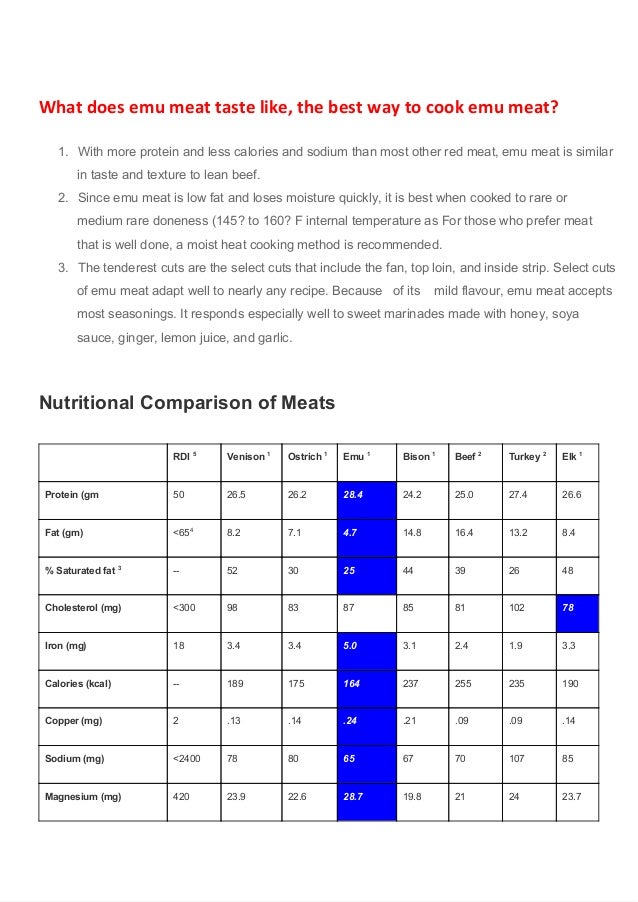
Emu meat is an excellent source of high-quality protein, essential for muscle building, repair, and overall bodily function. A typical 100-gram serving of cooked Emu meat can contain approximately 25-30 grams of protein. This is comparable to or even higher than many other common meats, including beef, chicken, and lamb. The protein in Emu meat is complete, meaning it contains all the essential amino acids that the human body cannot produce on its own. This makes it highly bioavailable and efficiently utilized by the body.
2. Remarkable Leanliness:
One of the most striking nutritional advantages of Emu meat is its exceptionally low fat content. A 100-gram serving typically contains around 1-3 grams of total fat, with a significant portion of that being unsaturated fats, particularly monounsaturated and polyunsaturated fatty acids. This is significantly lower than the fat content found in lean cuts of beef (around 5-10 grams per 100g) or even skinless chicken breast (around 3-5 grams per 100g). The low fat content translates to fewer calories per serving, making it an attractive option for weight management and for individuals monitoring their fat intake.
3. Cholesterol Considerations:
Despite being a red meat, Emu meat boasts a relatively low cholesterol content. A 100-gram serving typically contains around 50-70 milligrams of cholesterol. While this is not significantly lower than some other lean meats, its overall favorable fat profile and low saturated fat content contribute to its heart-healthy reputation.
4. Iron Rich:
Emu meat is an outstanding source of dietary iron, a crucial mineral for oxygen transport in the blood and for preventing iron-deficiency anemia. A 100-gram serving can provide 3-5 milligrams of iron, which is comparable to or even higher than that found in lean beef. The iron in Emu meat is primarily in the form of heme iron, which is more readily absorbed by the body than non-heme iron found in plant-based sources. This makes Emu meat particularly beneficial for individuals at risk of iron deficiency, such as women of childbearing age, vegetarians, and endurance athletes.
5. B Vitamins Galore:
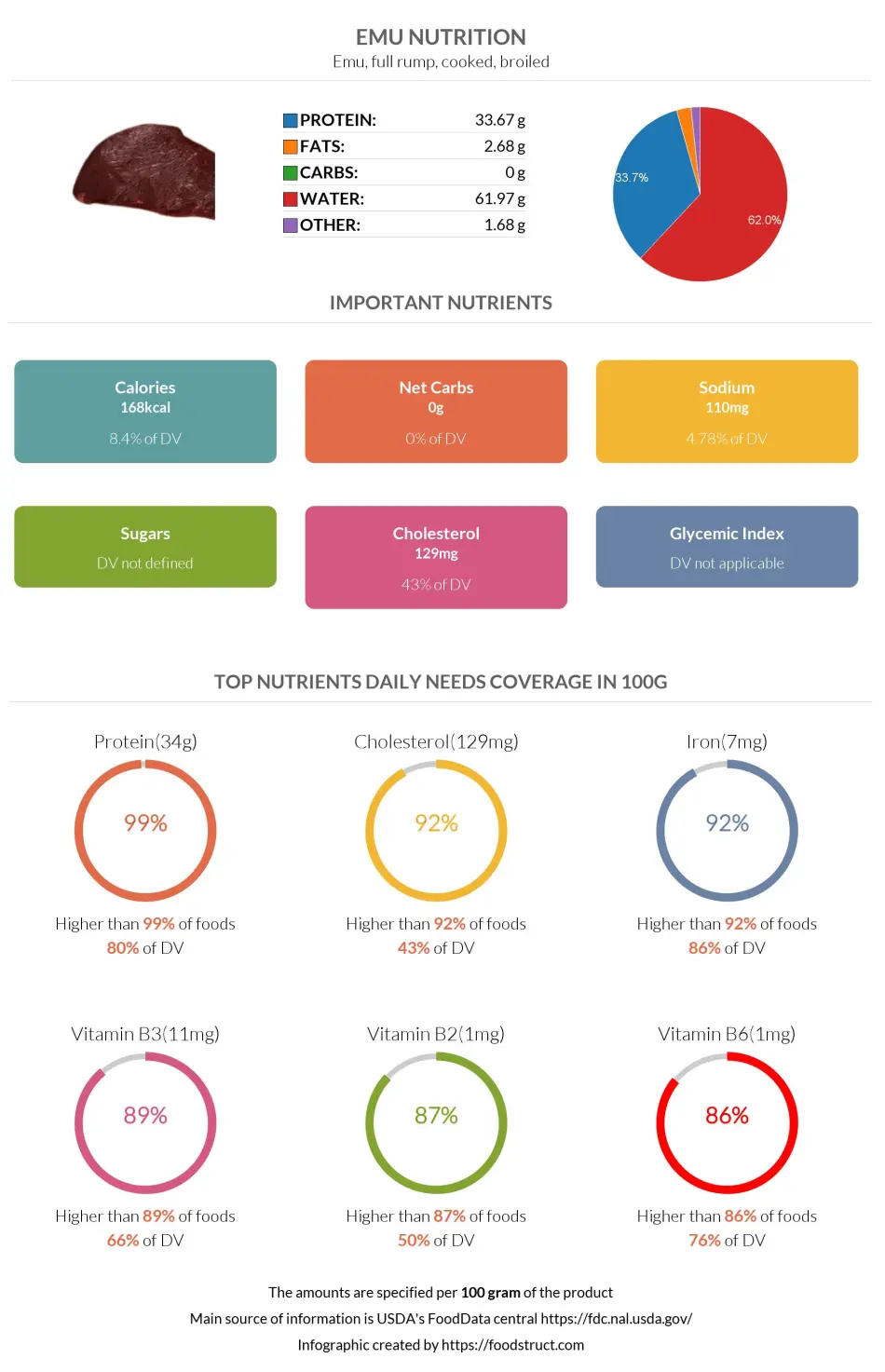
Emu meat is a rich source of several B vitamins, which play vital roles in energy metabolism, nerve function, and red blood cell formation.
- Vitamin B12: Essential for nerve function and the formation of DNA and red blood cells, Emu meat is an excellent source of B12. A 100-gram serving can provide a substantial portion of the recommended daily intake.
- Niacin (B3): Important for converting food into energy and for maintaining healthy skin and nervous system.
- Riboflavin (B2): Crucial for energy production and cellular function.
- Vitamin B6: Involved in protein metabolism and the production of neurotransmitters.
6. Zinc and Selenium Contributions:
Emu meat also contributes valuable minerals like zinc and selenium. Zinc is important for immune function, wound healing, and cell growth. Selenium is a powerful antioxidant that helps protect cells from damage and supports thyroid function.
7. Minimal Saturated Fat:
The low overall fat content in Emu meat is mirrored by a low proportion of saturated fats. This is a significant advantage for cardiovascular health, as high intake of saturated fat is linked to increased levels of LDL cholesterol.
8. Glycemic Index:
As a protein source, Emu meat has a negligible impact on blood glucose levels, making it a suitable food choice for individuals managing diabetes or seeking to stabilize their blood sugar.
Culinary Appeal and Versatility
Beyond its impressive nutritional credentials, Emu meat offers a delightful culinary experience. It has a rich, slightly gamey flavor, often described as a blend between lean beef and venison, but with a milder profile. Its texture is tender and juicy, especially when cooked correctly.
The lean nature of Emu meat means it benefits from careful cooking to prevent it from becoming dry. Marinating, slow cooking, and grilling are excellent methods to retain moisture and enhance its flavor. It readily absorbs marinades and spices, making it incredibly versatile in the kitchen.
Emu Meat: A Sustainable Choice
The environmental impact of food production is an increasingly important consideration. Emu farming is often cited as a more sustainable option compared to conventional livestock farming. Emus are efficient converters of feed to meat, require less water and land than cattle or sheep, and produce fewer greenhouse gas emissions. Their foraging behavior can also contribute to land management. As the demand for sustainable protein grows, Emu meat emerges as a compelling and environmentally responsible choice.
Who Benefits from Emu Meat?
- Athletes and Fitness Enthusiasts: The high protein content and low fat make it ideal for muscle building, recovery, and maintaining a lean physique.
- Individuals Managing Weight: Its low calorie and fat content can support weight loss or maintenance goals.
- Those Concerned About Heart Health: The lean profile, low saturated fat, and healthy unsaturated fats are beneficial for cardiovascular well-being.
- Individuals Needing Iron: A fantastic dietary source of readily absorbed iron.
- Adventurous Eaters: For those seeking new flavors and culinary experiences.
- Health-Conscious Consumers: Anyone looking for a nutrient-dense, wholesome protein.
Considerations for Cooking Emu Meat
Due to its leanness, Emu meat cooks faster than fattier meats and can become dry if overcooked. Key tips for preparing Emu meat include:
- Marinating: Essential for adding moisture and flavor.
- Low and Slow Cooking: Braising, stewing, or slow roasting are excellent for tenderizing.
- Quick Cooking: Grilling or pan-searing steaks or fillets to medium-rare to medium is ideal.
- Resting: Always rest the meat after cooking to allow juices to redistribute.
- Fat Addition: Sometimes, a small amount of added fat (like olive oil or butter) during cooking can enhance juiciness.
Delicious Ways to Enjoy Emu Meat: Recipe Ideas
Emu meat can be used in a variety of dishes, from hearty stews to elegant steaks. Here are some recipe ideas to get you started:
1. Emu Steak with Red Wine Reduction
- Ingredients:
- 2 Emu steaks (fillet or sirloin, about 1-inch thick)
- 2 tbsp olive oil
- Salt and freshly ground black pepper
- 1 shallot, finely chopped
- 1 clove garlic, minced
- 1 cup dry red wine (e.g., Cabernet Sauvignon, Merlot)
- 1/2 cup beef broth
- 1 sprig fresh rosemary
- 1 tsp butter (optional, for finishing)
- Instructions:
- Pat Emu steaks dry and season generously with salt and pepper.
- Heat olive oil in a cast-iron skillet over medium-high heat. Sear steaks for 3-4 minutes per side for medium-rare, or longer to your desired doneness. Remove steaks from skillet and let rest.
- Reduce heat to medium. Add shallot to the skillet and sauté until softened, about 2 minutes. Add garlic and cook for another minute until fragrant.
- Pour in red wine and scrape up any browned bits from the bottom of the pan. Bring to a simmer and cook until reduced by half.
- Add beef broth and rosemary sprig. Simmer for another 5-7 minutes, or until the sauce has thickened slightly.
- Remove rosemary sprig. Whisk in butter if desired for a richer sauce.
- Slice rested Emu steaks and serve with the red wine reduction spooned over the top.
2. Emu Mince Bolognese
- Ingredients:
- 500g Emu mince
- 1 tbsp olive oil
- 1 onion, finely chopped
- 2 carrots, finely diced
- 2 celery stalks, finely diced
- 2 cloves garlic, minced
- 1 tsp dried oregano
- 1 tsp dried basil
- 1/2 tsp red pepper flakes (optional)
- 1 (400g) can crushed tomatoes
- 1/2 cup red wine (optional)
- 1/2 cup beef or vegetable broth
- Salt and freshly ground black pepper
- Fresh parsley, chopped (for garnish)
- Instructions:
- Heat olive oil in a large pot or Dutch oven over medium-high heat. Add Emu mince and cook, breaking it up with a spoon, until browned. Drain off any excess fat.
- Add onion, carrots, and celery to the pot. Cook until softened, about 8-10 minutes.
- Stir in garlic, oregano, basil, and red pepper flakes (if using). Cook for 1 minute until fragrant.
- Pour in crushed tomatoes, red wine (if using), and broth. Bring to a simmer, then reduce heat to low, cover, and cook for at least 1 hour, or up to 2-3 hours for a richer flavor, stirring occasionally.
- Season with salt and pepper to taste.
- Serve over your favorite pasta, garnished with fresh parsley.
3. Emu Sausage Rolls
- Ingredients:
- 500g Emu mince
- 1/4 cup finely chopped onion
- 1 clove garlic, minced
- 1 tsp dried sage
- 1/2 tsp dried thyme
- Salt and freshly ground black pepper
- 1 egg, beaten
- 2 sheets puff pastry, thawed
- 1 egg, beaten (for egg wash)
- Sesame seeds (optional, for topping)
- Instructions:
- Preheat oven to 200°C (400°F). Line a baking sheet with parchment paper.
- In a bowl, combine Emu mince, chopped onion, garlic, sage, thyme, salt, pepper, and 1 beaten egg. Mix well until thoroughly combined.
- Divide the mixture into two equal portions. Place one portion onto a sheet of puff pastry, shaping it into a log down the center.
- Brush the edges of the pastry with egg wash. Fold the other side of the pastry over the filling and press to seal. Trim any excess pastry.
- Repeat with the second sheet of pastry and the remaining filling.
- Cut each log into individual sausage rolls (about 4-5 per log). Place them on the prepared baking sheet.
- Brush the tops of the sausage rolls with egg wash and sprinkle with sesame seeds if desired.
- Bake for 20-25 minutes, or until golden brown and puffed.
- Let cool slightly before serving.
4. Emu Stir-fry with Vegetables
- Ingredients:
- 300g Emu fillet, thinly sliced
- 2 tbsp soy sauce
- 1 tbsp cornstarch
- 1 tbsp vegetable oil, plus more for stir-frying
- 1 clove garlic, minced
- 1 inch ginger, grated
- Assorted stir-fry vegetables (e.g., broccoli florets, sliced bell peppers, snap peas, carrots)
- 1/4 cup chicken or vegetable broth
- 1 tsp sesame oil
- Instructions:
- In a bowl, toss the sliced Emu fillet with soy sauce and cornstarch. Let it marinate for at least 15 minutes.
- Heat 1 tbsp vegetable oil in a wok or large skillet over high heat. Add the marinated Emu and stir-fry until browned and just cooked through. Remove from wok and set aside.
- Add a little more oil to the wok if needed. Add garlic and ginger and stir-fry for 30 seconds until fragrant.
- Add the assorted vegetables and stir-fry for 3-5 minutes until crisp-tender.
- Return the cooked Emu to the wok. Pour in the broth and stir to combine.
- Cook for another 1-2 minutes, allowing the sauce to thicken slightly.
- Stir in sesame oil. Serve immediately over steamed rice or noodles.
Conclusion
Emu meat is more than just a novelty; it is a legitimate and outstanding contributor to a healthy and balanced diet. Its exceptional protein content, remarkable leanness, rich iron profile, and abundance of B vitamins make it a nutritional powerhouse. Coupled with its appealing flavor, tender texture, and sustainable farming potential, Emu meat is poised to move from the fringe to the forefront of conscious food choices. Whether you’re an athlete seeking optimal nutrition, a home cook looking for healthy and versatile ingredients, or simply someone curious to explore new culinary horizons, Emu meat offers a compelling and delicious proposition. As you consider your next protein choice, remember the bird from down under – its meat is a true testament to the nutritious gifts of nature.


