
Embark on a culinary journey that transcends time, reaching back to the heart of the North American plains. This recipe for Lakota Bison and Three Sisters Stew is more than just a meal; it’s a vibrant tribute to indigenous culinary traditions, offering a taste of history and a comforting warmth that nourishes both body and soul.
Imagine a rich, savory broth brimming with tender pieces of lean bison, slow-cooked to perfection, and infused with the earthy goodness of corn, beans, and squash – the sacred ‘Three Sisters’ of Native American agriculture. Each spoonful tells a story of sustainability, resourcefulness, and deep connection to the land.
The Lakota people, a prominent tribe of the Great Sioux Nation, have long utilized the bounty of their environment to create nourishing and flavorful dishes. Bison, once the lifeblood of the plains tribes, forms the robust protein base, while the ‘Three Sisters’ – corn, beans, and squash – represent a harmonious agricultural system where each plant supports the others’ growth.
This stew is ideal for chilly evenings, family gatherings, or any occasion where you desire a substantial, wholesome meal that carries a profound sense of heritage. It’s a perfect dish to share, sparking conversations about culture, history, and the simple pleasure of good food.

Recipe Information:
- Prep Time: Approximately 30 minutes
- Cook Time: 2 hours 30 minutes to 3 hours (including simmering)
- Difficulty: Medium
- Servings: 6-8 people
- 600-700g (about 1.5 lbs) bison stew meat, cut into 1-inch cubes
- 2 tablespoons sunflower oil (or other neutral cooking oil)
- 1.5 liters (about 6 cups) bison or beef broth, low sodium
- 2 large potatoes, peeled and cut into 1-inch cubes
- 1 cup pearl barley or wild rice, rinsed (optional, for extra heartiness)
- Salt and freshly ground black pepper to taste
- 1 large yellow onion, chopped
- 3 cloves garlic, minced
- 2 carrots, peeled and diced
- 2 stalks celery, diced
- 1 teaspoon dried sage
- 1 teaspoon dried thyme
- 1 bay leaf
- 1 cup fresh or frozen corn kernels
- 1 cup cooked kidney beans or pinto beans (or 1 can, rinsed and drained)
- 1 small butternut squash (about 500g/1 lb), peeled, deseeded, and cut into 1-inch cubes
- 1/2 cup fresh parsley, chopped (for garnish)
1. Prepare the Bison: Pat the bison stew meat dry with paper towels. Season generously with salt and freshly ground black pepper. Drying the meat is crucial for achieving a good sear.
2. Brown the Bison: Heat the sunflower oil in a large, heavy-bottomed pot or Dutch oven over medium-high heat. Add the bison in batches, ensuring not to overcrowd the pot. Brown the meat on all sides until a deep, rich crust forms. This step is vital for developing deep flavor. Remove the browned bison and set aside.
3. Sauté Aromatics: Reduce the heat to medium. Add the chopped onion, carrots, and celery to the pot. Sauté for 5-7 minutes, scraping up any browned bits from the bottom of the pot, until the vegetables soften and become fragrant. If the pot seems too dry, add a splash of broth.
4. Add Garlic and Herbs: Stir in the minced garlic, dried sage, and dried thyme. Cook for another minute until the garlic is fragrant, being careful not to burn it.
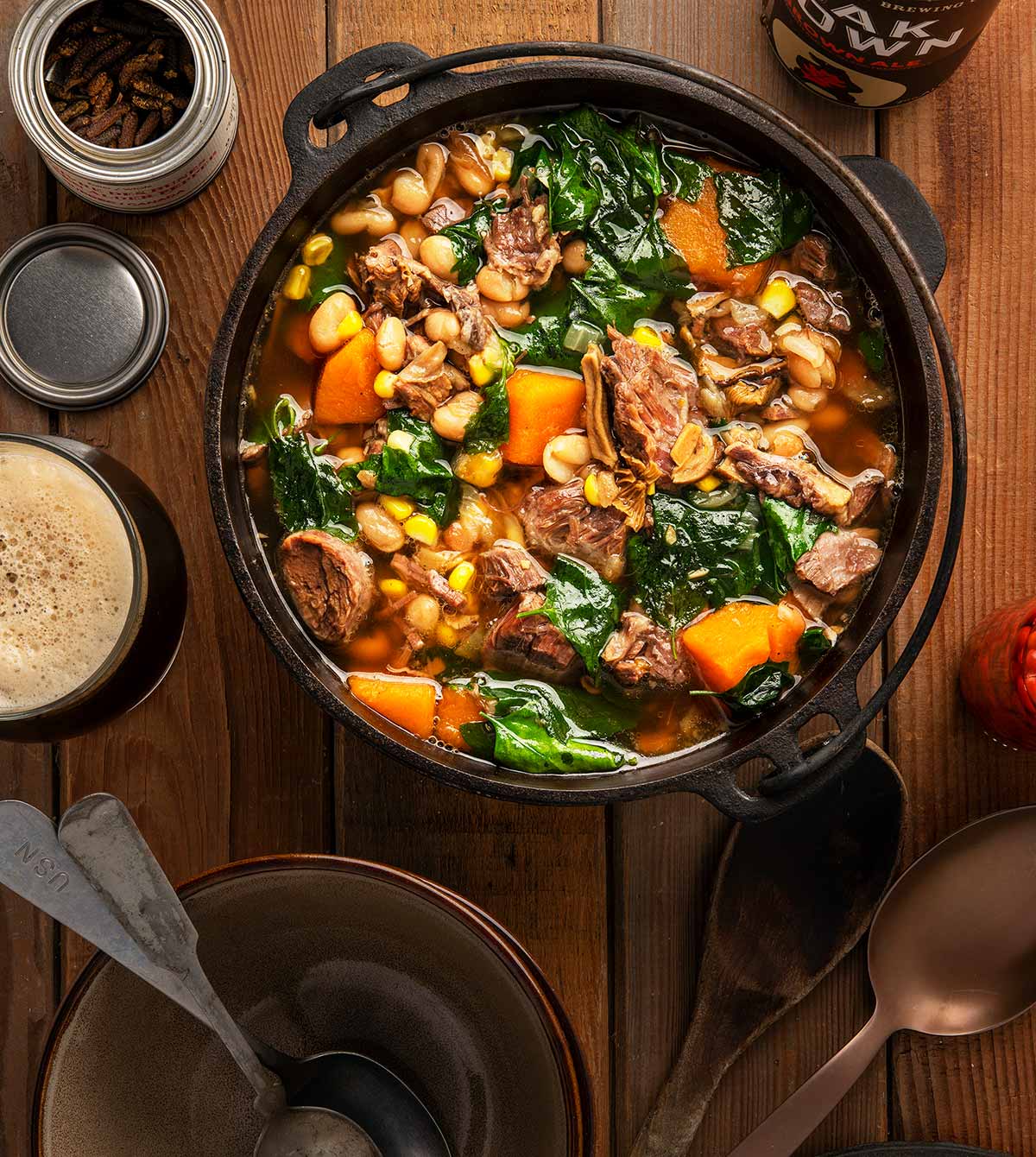
5. Deglaze and Combine: Return the browned bison to the pot. Pour in about 1 cup of the bison or beef broth, scraping the bottom of the pot to loosen any remaining flavorful browned bits (this is called deglazing).
6. Add Remaining Broth and Bay Leaf: Pour in the remaining broth, ensuring the meat is mostly submerged. Add the bay leaf. Bring the mixture to a gentle simmer.
7. Initial Simmer for Tenderness: Once simmering, reduce the heat to low, cover the pot, and let it cook for at least 1.5 to 2 hours, or until the bison is fork-tender. Check periodically and stir to prevent sticking. The longer it simmers, the more tender the meat will become.
8. Introduce Root Vegetables: After the initial simmering period, add the cubed potatoes and rinsed pearl barley or wild rice (if using) to the pot. Continue to simmer, covered, for another 20-30 minutes, or until the potatoes and barley/rice are nearly tender.
9. Add the ‘Three Sisters’ Vegetables: Stir in the cubed butternut squash, corn kernels, and cooked beans. Continue to cook for an additional 15-20 minutes, or until the squash is tender but not mushy, and the corn and beans are heated through.
10. Adjust Seasoning and Consistency: Remove the bay leaf. Taste the stew and adjust seasoning with salt and pepper as needed. If you prefer a thicker stew, you can mash a few potato cubes against the side of the pot or mix a tablespoon of cornstarch with a little cold water and stir it into the simmering stew.
11. Rest Before Serving: Turn off the heat and let the stew rest, covered, for about 10-15 minutes before serving. This allows the flavors to meld and the stew to cool slightly for easier eating.
12. Garnish: Ladle the hearty stew into bowls and garnish generously with fresh chopped parsley.
1. Don’t Skip Browning the Bison: This step is fundamental for building deep, complex flavors. A good sear creates a rich crust that translates into a more savory stew. Ensure the meat is dry and the oil is hot.
2. Quality of Ingredients Matters: Opt for good quality bison meat, fresh vegetables, and a flavorful broth. These foundational ingredients will elevate your stew significantly.
3. Low and Slow is Key: Bison, being a lean meat, benefits from long, slow simmering to become truly tender. Rushing the cooking process will result in tough meat.
4. Layer Your Seasonings: Season the meat before browning, then add aromatics and herbs, and finally adjust salt and pepper at the end. This builds flavor complexity throughout the cooking process.
5. Don’t Overcook the ‘Three Sisters’: Add the squash, corn, and beans towards the end of the cooking process to ensure they remain tender-crisp and don’t turn mushy, preserving their texture and vibrant color.
6. Make Ahead for Enhanced Flavor: Like many stews, this Lakota Bison Stew often tastes even better the next day, after the flavors have had more time to meld and deepen. It reheats beautifully.
7. Embrace the Flexibility: While this recipe is traditional, feel free to adapt it slightly based on available seasonal vegetables. Root vegetables like parsnips or sweet potatoes can also be wonderful additions.
While exact values vary based on ingredients and portion sizes, a serving of this hearty Lakota Bison and Three Sisters Stew is estimated to contain approximately 350-450 calories. It is an excellent source of lean protein from the bison, fiber from the beans and vegetables, and essential vitamins and minerals, making it a highly nutritious and satisfying meal.
This stew is a testament to the ingenuity and wisdom of indigenous culinary practices. It’s a dish that celebrates the land, its resources, and the enduring spirit of a culture that has mastered the art of creating nourishing and delicious food from what nature provides.
By preparing this Lakota Bison and Three Sisters Stew, you’re not just cooking a meal; you’re participating in a rich tradition, honoring the heritage of the Lakota people, and bringing a piece of their timeless culinary legacy to your own table. Enjoy the warmth, the history, and the incredible flavors.


:max_bytes(150000):strip_icc()/best-ever-succotash-recipe-3x4-61-c9230cceec7b4e15aeda6c213d42da12.jpg?w=200&resize=200,135&ssl=1 "Succotash: A Flavorful Fusion of Summer’s Best")
