
The Marvel of Karkalla: Cultivating a Coastal Gem
The Karkalla plant, scientifically known as Carpobrotus glaucescens, is a resilient and visually striking succulent that hails from the coastal regions of Australia. Its name, often shortened to Karkalla or Pigface, hints at its characteristic fleshy leaves and its ability to thrive in challenging environments. More than just a hardy groundcover, Karkalla is a plant of remarkable beauty and surprising utility, boasting edible fruits and a vital role in coastal erosion control. Cultivating Karkalla is a rewarding endeavor, offering a touch of the wild, untamed coastline to your own garden or even a sunny windowsill. This comprehensive guide will delve into the intricacies of Karkalla plant care, from understanding its native habitat to nurturing it to its full potential, and even exploring its culinary applications.
Understanding Karkalla’s Native Habitat: The Foundation of Successful Care
To truly understand how to care for Karkalla, we must first appreciate its natural environment. Carpobrotus glaucescens is a quintessential coastal plant, perfectly adapted to survive the harsh conditions of sand dunes and rocky shores. This means it thrives in:
- Abundant Sunlight: Karkalla loves the sun. In its natural habitat, it’s exposed to intense solar radiation for most of the day. This translates to a need for at least six to eight hours of direct sunlight daily for optimal growth and flowering.
- Well-Draining Soil: Coastal soils are inherently sandy and free-draining. Karkalla cannot tolerate waterlogged conditions, which can lead to root rot. It prefers gritty, sandy, or gravelly soil that allows water to pass through quickly.
- Salt Tolerance: Its coastal origins have equipped Karkalla with a remarkable tolerance for salt spray and saline soils. This makes it an excellent choice for gardens near the sea or for areas where soil salinity might be a concern.
- Drought Resistance: Once established, Karkalla is exceptionally drought-tolerant. Its succulent leaves store water, allowing it to survive long periods without rainfall. This resilience is a key factor in its low-maintenance appeal.
- Wind Exposure: Coastal areas are often windswept. Karkalla’s low-growing, spreading habit and tough, leathery leaves make it well-suited to withstand strong winds without significant damage.
Understanding these environmental factors is crucial. Mimicking these conditions in your own garden will set the stage for a thriving Karkalla plant.
Cultivating Your Karkalla: From Planting to Ongoing Care
1. Propagation: Bringing Karkalla into Your Garden
Karkalla is relatively easy to propagate, offering multiple avenues for expanding your collection:
-
From Cuttings: This is the most common and successful method.
- Timing: Take cuttings during the warmer months (spring to early autumn) when the plant is actively growing.
- Process: Select healthy, mature stems that are at least 10-15 cm long. Use a clean, sharp knife or secateurs to make a cut just below a leaf node.
- Drying: Allow the cuttings to callous over for a few days to a week. This prevents rot when planted. You’ll notice a dry, scar-like surface at the cut end.
- Planting: Insert the calloused end into well-draining potting mix, a sandy soil, or even directly into the ground in a prepared location. You can use a rooting hormone to encourage faster root development, though it’s often not necessary.
- Watering: Water sparingly after planting, allowing the soil to dry out between waterings.
- Rooting: Roots typically develop within a few weeks to a couple of months. You’ll know it’s established when it starts to show new growth.
-
From Seed: While possible, growing Karkalla from seed is a slower and less predictable method. Seeds need to be sown in well-draining soil and kept consistently moist until germination.
-
Division: Mature Karkalla plants can be divided by carefully separating clumps of roots and stems. This is best done in spring.
2. Planting and Placement: Setting the Stage for Success
- Location: Choose a location that receives full sun for the majority of the day. South-facing positions in the Northern Hemisphere or north-facing in the Southern Hemisphere are ideal.
- Soil Preparation: If planting in the ground, amend heavy clay soils with plenty of sand and grit to improve drainage. For containers, use a succulent or cactus potting mix, or create your own by combining potting soil with perlite and coarse sand.
- Spacing: Karkalla is a groundcover that spreads. If planting multiple specimens, space them about 30-60 cm apart, depending on how quickly you want them to fill in.
- Container Growing: Karkalla is well-suited for containers, especially terracotta or ceramic pots that allow for good airflow and drainage. Ensure the pot has drainage holes.
3. Watering: The Art of Not Overdoing It
This is where many beginners make mistakes. Karkalla is a succulent, meaning it stores water in its leaves.
- Established Plants: Once established, Karkalla is incredibly drought-tolerant. Water deeply but infrequently. Allow the soil to dry out completely between waterings. During prolonged dry spells, a thorough watering every few weeks might be sufficient.
- Newly Planted Cuttings/Plants: These will require more frequent watering initially until their root system develops. Keep the soil lightly moist but not soggy.
- Signs of Overwatering: Yellowing leaves, mushy stems, and root rot are clear indicators of overwatering.
- Signs of Underwatering: Wrinkled or deflated-looking leaves can signal a need for water, though Karkalla is quite forgiving.
4. Sunlight: The More, The Merrier
As mentioned, Karkalla craves sunlight. Insufficient light will lead to leggy growth, reduced flowering, and a less compact habit. If your Karkalla is looking stretched and pale, it’s a sure sign it needs more sun.
5. Fertilizing: A Light Touch is Best
Karkalla is not a heavy feeder. In fact, over-fertilizing can lead to weak, leggy growth and a decrease in flowering.
- Frequency: A light feeding once or twice during the growing season (spring and summer) is usually sufficient.
- Type of Fertilizer: Use a balanced, water-soluble fertilizer diluted to half strength, or a specific succulent fertilizer.
- Avoid: Do not fertilize in late autumn or winter when the plant is dormant.
6. Pruning: Shaping and Maintaining
Karkalla generally requires minimal pruning. However, you may wish to prune for:
- Shape and Size Control: To keep the plant within bounds or to encourage a denser growth habit.
- Removing Dead or Damaged Growth: Trim away any withered or broken stems to maintain the plant’s health and appearance.
- Encouraging Bushiness: Pinching back the tips of new growth can encourage the plant to branch out and become bushier.
Pruning is best done with clean, sharp secateurs. The cuttings can be used for propagation.
7. Pests and Diseases: Resilience Personified
Karkalla is remarkably resistant to pests and diseases, a testament to its hardy nature. However, under certain conditions, you might encounter:
- Mealybugs and Aphids: These sap-sucking insects can occasionally infest Karkalla. They can be treated with a strong jet of water, insecticidal soap, or neem oil.
- Root Rot: This is the most common issue and is almost always caused by overwatering and poor drainage. Ensure excellent drainage and avoid soggy soil.
8. Flowering and Fruiting: A Reward for Good Care
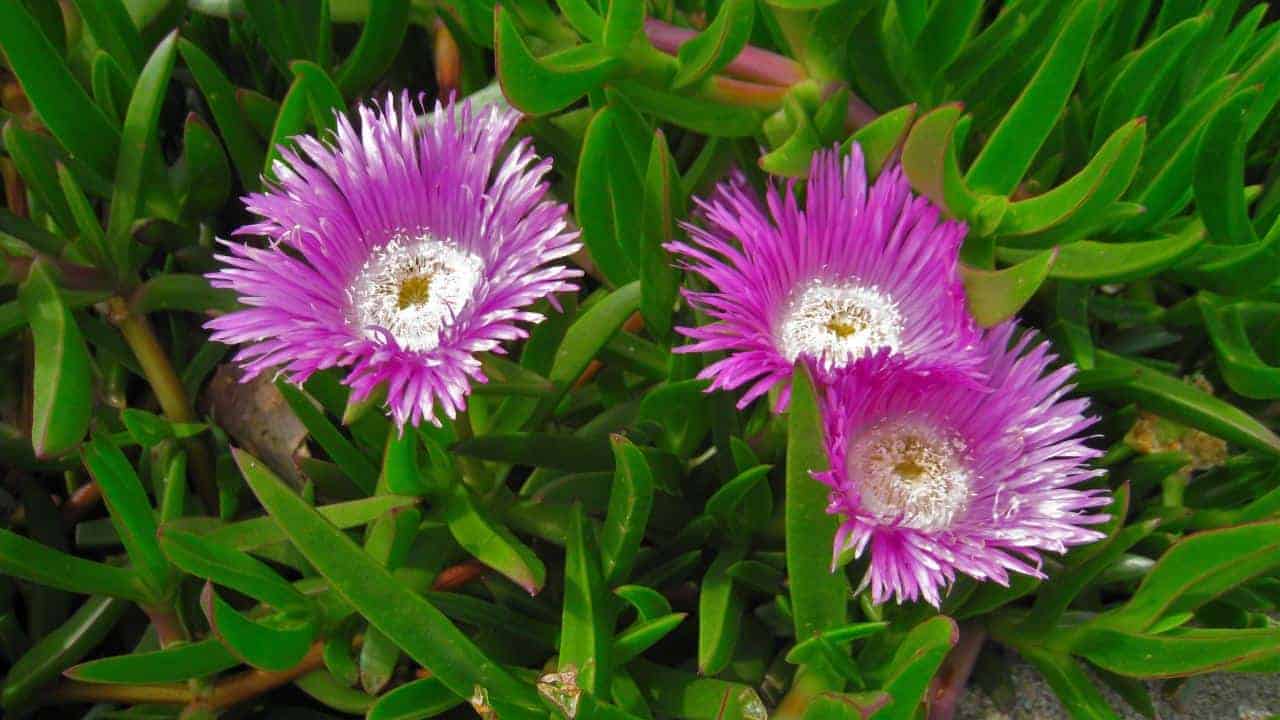
Karkalla typically blooms from late spring through summer, producing beautiful, daisy-like flowers that can range in color from vibrant pink to purple. The flowers are followed by edible, fleshy fruits.
- Pollination: The flowers are often pollinated by insects.
- Fruiting: The fruits are typically ripe when they turn a reddish-purple color. They have a mild, slightly sweet, and sometimes a little tart flavor, often described as tasting like a cross between a strawberry and a raspberry.
The Culinary Delights of Karkalla: More Than Just a Pretty Face
The edible fruits of the Karkalla plant have been a traditional food source for Indigenous Australians for centuries. Their sweet, juicy flesh offers a refreshing treat, especially during the warmer months.
Harvesting:
- Harvest the fruits when they are fully ripe, indicated by their color and slight softness.
- Gently twist or pull the fruits from the plant.
Culinary Uses:
Karkalla fruits can be enjoyed fresh, added to salads, or used in a variety of dishes. Their slightly tart and sweet flavor makes them versatile.
Karkalla Recipe Ideas:
Here are a few simple and delicious ways to enjoy your Karkalla harvest:
1. Fresh Karkalla Berry Salad
This is the simplest way to appreciate the natural flavor of Karkalla.
Ingredients:
- 1 cup fresh Karkalla berries, rinsed
- 1/2 cup mixed berries (strawberries, raspberries, blueberries)
- 1/4 cup crumbled feta cheese (optional, for a savory contrast)
- A handful of fresh mint leaves, chopped
- A drizzle of honey or a light vinaigrette (lemon juice and olive oil)
Instructions:
- Gently combine the Karkalla berries and mixed berries in a bowl.
- If using, scatter the crumbled feta cheese over the berries.
- Sprinkle with chopped mint leaves.
- Drizzle with honey or your preferred vinaigrette just before serving.
2. Karkalla Jam or Preserve
Capture the sweet essence of Karkalla in a delicious jam.
Ingredients:
- 2 cups Karkalla berries
- 1 cup granulated sugar (adjust to taste)
- 1 tablespoon lemon juice
- 1/4 teaspoon pectin (optional, for a firmer set)
Instructions:
- Gently mash the Karkalla berries in a saucepan.
- Add the sugar, lemon juice, and pectin (if using).
- Stir well and place the saucepan over medium heat.
- Bring the mixture to a boil, stirring constantly.
- Reduce the heat and simmer for 15-20 minutes, or until the jam thickens. Skim off any foam that rises to the surface.
- To test for set, place a small amount of jam on a chilled plate. If it wrinkles when pushed, it’s ready.
- Pour the hot jam into sterilized jars and seal tightly. Allow to cool completely before storing in the refrigerator.
3. Karkalla Smoothie Booster
Add a unique fruity tang to your favorite smoothie.
Ingredients:
- 1 cup of your favorite smoothie base (yogurt, milk, plant-based milk)
- 1/2 frozen banana
- 1/4 cup Karkalla berries
- 1 tablespoon chia seeds
- A drizzle of honey or maple syrup (optional)
Instructions:
- Combine all ingredients in a blender.
- Blend until smooth and creamy.
- Adjust sweetness if needed.
4. Karkalla and Mint Iced Tea
A refreshing and subtly sweet beverage for a hot day.
Ingredients:
- 2 cups water
- 1/4 cup Karkalla berries
- 1/4 cup fresh mint leaves
- 2 tablespoons honey or other sweetener, to taste
- Ice cubes
Instructions:
- In a small saucepan, bring the water to a simmer.
- Add the Karkalla berries and mint leaves.
- Remove from heat, cover, and let steep for 15-20 minutes.
- Strain the liquid into a pitcher, discarding the solids.
- Stir in the honey or sweetener until dissolved.
- Chill the tea in the refrigerator.
- Serve over ice, garnished with a sprig of mint.
The Ecological Significance of Karkalla
Beyond its aesthetic and culinary appeal, Karkalla plays a crucial role in its native environment. Its dense, spreading growth habit makes it an excellent sand stabilizer, helping to prevent coastal erosion. By anchoring sand dunes, it protects shorelines from the damaging effects of wind and waves. Planting Karkalla in coastal gardens not only enhances their beauty but also contributes to the health and stability of the local ecosystem.
Conclusion: A Coastal Champion in Your Care
The Karkalla plant is a testament to nature’s ingenuity. Its ability to thrive in challenging coastal conditions, its beautiful blooms, its edible fruits, and its ecological importance make it a truly remarkable specimen. By understanding its needs – ample sunlight, excellent drainage, and a light hand with water and fertilizer – you can successfully cultivate this coastal gem in your own garden. Whether you’re looking for a low-maintenance groundcover, a unique edible plant, or a way to contribute to coastal conservation, Karkalla offers a wealth of benefits and a touch of wild, untamed beauty to any landscape. Embrace the simplicity and resilience of Karkalla, and enjoy the rewards it brings.


